
If you have ever watched your child become completely absorbed in something that caught their eye and thought, “I wish school felt like that for them,” you are already instinctively drawn to the idea of child-led learning.
It is one of the most talked-about approaches in early childhood education right now, and for good reason. But for many parents, it can feel like a concept that sounds wonderful in theory and slightly mysterious in practice. What does it actually mean? Does it mean children do whatever they like all day? How does structure fit in? And how do you know they are actually learning?
This guide answers all of that, clearly and practically, so you can understand what child-led learning really looks like and why the best early years nurseries in the world are built around it.
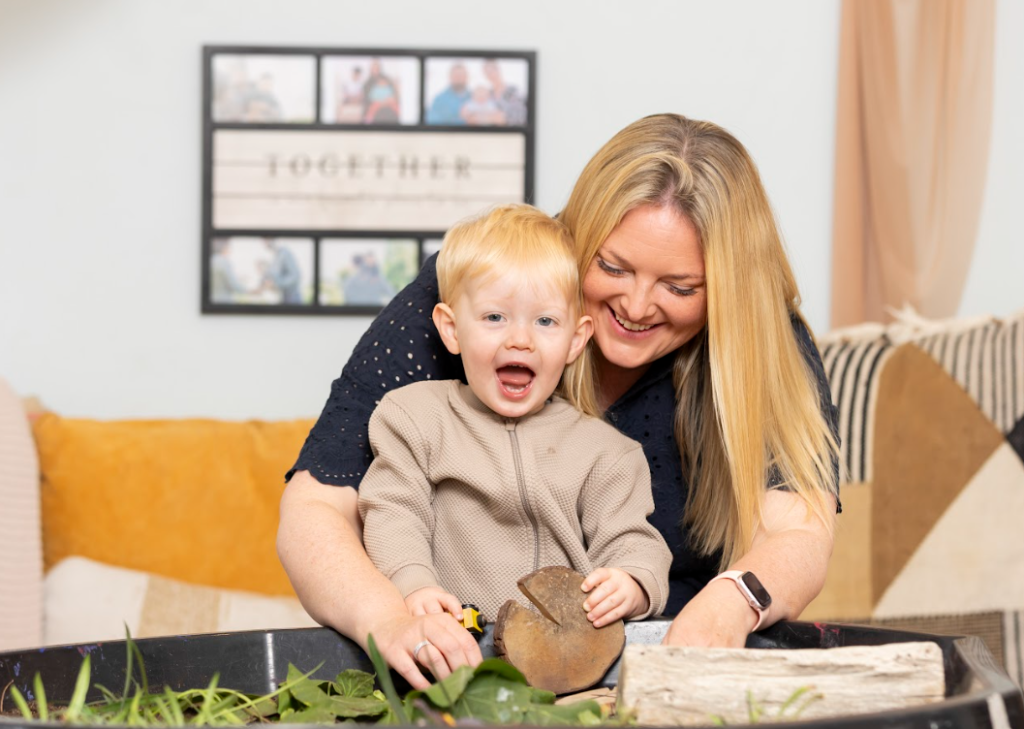
What Is Child-Led Learning?
Child-led learning is an approach to early education in which children’s own interests, curiosity, and natural instincts guide the direction of their learning. Rather than following a rigid, adult-designed programme where every child covers the same content at the same time, children are given space to explore, question, choose, and discover at their own pace and in their own way.
This does not mean there are no adults in the room or that anything goes. It means that skilled educators observe each child carefully, follow their interests, and create rich environments and experiences that extend and deepen those interests. The teacher’s role shifts from “instructor delivering content” to “responsive guide facilitating discovery.”
The roots of this approach trace back to some of the most influential figures in child development, including Maria Montessori, Friedrich Froebel, and the Reggio Emilia philosophy pioneered in northern Italy. The common thread across all of them is the belief that children are not empty vessels waiting to be filled with knowledge. They are naturally curious, capable learners who, when given the right environment and support, will drive their own intellectual and emotional growth.
Why Child-Led Learning Works
The evidence base for child-led learning in the early years is substantial and growing. Research consistently shows that when young children have agency over their learning, they demonstrate deeper engagement, stronger reasoning and problem-solving abilities, greater creativity, and more sustained concentration than when learning is entirely directed by adults.
There is also a neurological dimension to this. Young children’s brains are wiring at an extraordinary rate in the first five years of life. Experiences that are personally meaningful, emotionally engaged, and actively chosen create stronger and more lasting neural connections than passive reception of information. Put simply: children remember and apply what they were genuinely interested in. Play is not the opposite of learning. For young children, it is the primary vehicle for it.
Child-led learning also nurtures qualities that no amount of worksheet drilling can produce: confidence, resilience, the ability to manage frustration, and the deep satisfaction of working something out independently. These are the qualities that serve children throughout their entire educational journey and beyond.
What It Looks Like in Practice
For parents new to the concept, one of the most helpful things is to see what child-led learning actually looks like in a well-run early years setting.
It looks like a child who is fascinated by insects spending a week building on that interest through books, outdoor exploration, drawing, storytelling, counting legs, and comparing sizes, with an educator who has quietly arranged for all of these experiences to be available. It looks like a child who loves construction choosing to spend extended time with blocks and loose parts, developing spatial reasoning, logical thinking, and collaborative language without ever being aware they are “doing maths.”
It looks, in short, like children who are happy, absorbed, purposeful, and growing.
At Yellow Kite Nursery (formerly Kangaroo Kids), our leading nursery in Dubai, located in Al Safa 2, this philosophy sits at the very heart of everything we do. As Dubai’s only Curiosity Approach Accredited nursery, Yellow Kite Nursery (formerly Kangaroo Kids) combines the Curiosity Approach with the British EYFS curriculum to create an environment where children are genuinely inspired to lead their own learning journeys. Authentic, open-ended materials replace plastic toys. Calm, thoughtfully designed spaces replace overstimulating environments, and educators who truly know each child replace one-size-fits-all teaching.
The Role of the Environment
Child-led learning does not happen by accident. It requires a carefully designed environment, what Reggio Emilia educators call “the third teacher,” because the space itself teaches and invites exploration.
Real, natural materials with varied textures and open-ended possibilities stimulate curiosity and deeper engagement than predetermined toys with single uses. Loose parts, wooden tools, fabric, sand, water, and natural objects invite children to think creatively, find solutions, and construct meaning on their own terms. Research strongly supports this: open-ended materials encourage flexible thinking, sustained attention, and cognitive strength.
Yellow Kite Nursery’s (formerly Kangaroo Kids) 25,000-square-foot garden is a living example of this principle. Outdoor space is not a break from learning. It is where some of the deepest learning of the early years happens, through movement, sensory exploration, risk-taking, and connection with the natural world. The Forest School approach embedded in our nursery’s curriculum takes this further, building children’s relationship with nature as a consistent and central part of our education.
What About Structure and Progress?
This is the question most parents arrive at. If children are choosing their own direction, how do educators ensure they are actually developing across all areas? How do you know a child is progressing?
The answer lies in skilled observation. In a high-quality child-led nursery, educators are trained to track development across all areas of learning through careful, ongoing observation of children at play and in self-chosen activity. The British EYFS framework, which underpins the curriculum at Yellow Kite Nursery in Dubai (formerly Kangaroo Kids), provides a clear developmental framework across seven areas of learning: communication and language, physical development, personal, social and emotional development, literacy, mathematics, understanding the world, and expressive arts and design.
Structure is present, but it is responsive rather than rigid. Daily rhythms and routines provide security and predictability. Group experiences, stories, songs, and guided activities run alongside self-directed play. The balance between child-initiated and adult-supported learning is carefully calibrated by trained educators who know how to recognise learning in all its forms, including the learning that happens when a child is simply following their nose.
How Parents Can Support Child-Led Learning at Home
Child-led learning does not stop at the nursery gate. Parents who understand and embrace this approach at home create a powerful continuity that amplifies everything happening in the nursery.
The most effective thing parents can do is follow their child’s lead during unstructured time. Resist the urge to direct every activity or immediately offer solutions. When your child is building something that keeps falling down, wait. Watch what they do. Ask open questions rather than giving answers. “What do you think would happen if you tried it a different way?” is infinitely more valuable than simply showing them how.
Create space for uninterrupted, open-ended play at home. A collection of loose parts, natural objects, art materials, and books will take a child further than a room full of electronic toys. Prioritise outdoor time. Let your child explore freely, collect things, notice things, and spend time in environments that are bigger and less controlled than indoor spaces.
Talk, narrate what you observe, respond to questions with curiosity rather than quick answers, and show genuine interest in what your child is interested in, even if it is currently an exhaustive fascination with a particular type of beetle. That interest is not trivial. It is the engine of their learning.
Principal Laura Says:
“As a principal, one of the most special parts of my role is watching children’s natural curiosity unfold each day. Child-led learning is something I feel deeply passionate about because it truly respects children for who they are — capable, curious individuals who are eager to explore and make sense of the world around them.
When we give children the time and space to follow their interests, we see them light up with excitement, confidence, and a genuine love for learning. Whether they are asking endless questions, exploring new ideas through play, or solving problems in their own unique ways, these moments build not only knowledge but also independence, resilience, and self-belief.
I understand that for some parents this approach can feel different from more traditional methods of teaching. But child-led learning does not mean children are left without guidance — quite the opposite. Our educators carefully observe, listen, and gently support each child’s learning journey, creating meaningful opportunities that help them grow while honouring their individuality.
For me, education is always strongest when there is a close partnership between home and nursery. When families and educators work together to nurture curiosity and celebrate each child’s voice, children feel safe, valued, and confident to thrive.
Ultimately, child-led learning is about more than preparing children for the next stage of education — it is about nurturing happy, confident learners who feel empowered, understood, and excited about discovering the world.”
Choosing the Right Early Years Nursery
For parents in Dubai, the early years nursery you choose has a profound influence on how your child experiences learning in those formative first years. The question is not just what a nursery covers but how it approaches children and learning at the deepest level.
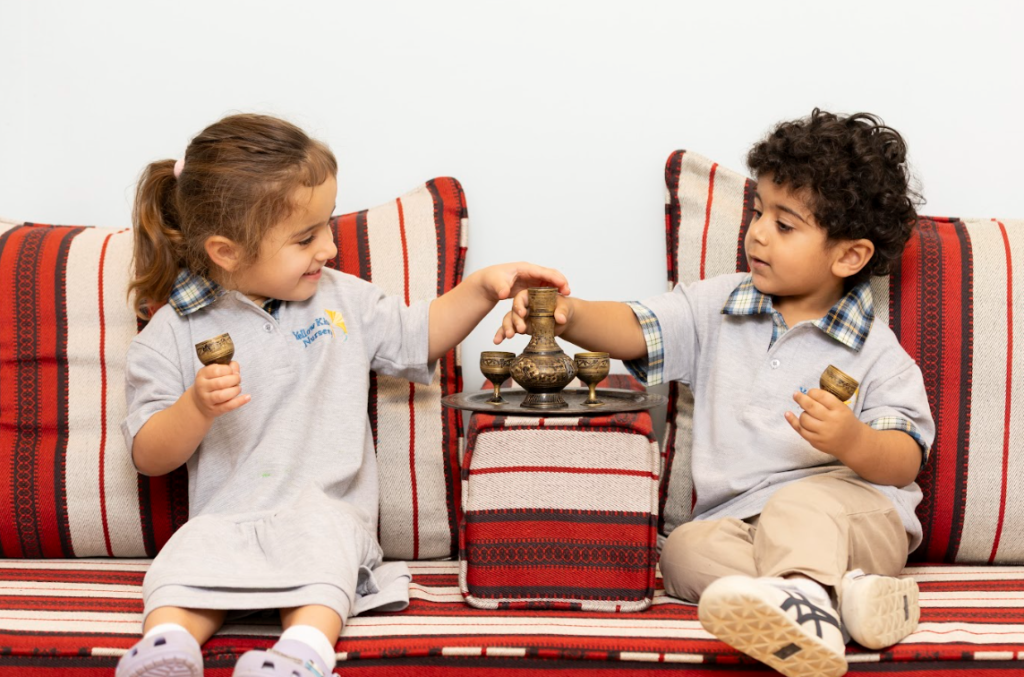
Yellow Kite Nursery in Dubai (formerly Kangaroo Kids) has spent over 20 years building an environment, a community, and a curriculum that places children at the centre. The Curiosity Approach Accreditation, the Forest School provision, the Hygge-inspired, calm and cosy indoor spaces, the Arabic language and cultural education, and the deeply experienced team of educators all work together to create something genuinely distinctive.
Parents who have made the move to Yellow Kite Nursery (formerly Kangaroo Kids) consistently describe a nursery that feels different from the moment you walk through the door. Not louder or more impressive, but quieter, calmer, and more purposeful. A place where children belong, where educators truly know each child, and where learning happens not in spite of play but entirely through it.
To book a tour of Yellow Kite Nursery (formerly Kangaroo Kids) in Al Safa 2, call +971 4 395 5518, or reach out on WhatsApp at +971 58 593 2884. Your child’s curiosity is waiting to take flight.