

We are the first Curiosity Approach Accredited nursery in Dubai, offering a nature-led early childhood education program for families in Al Safa 2. Founded by UK education experts Lyndsey Hellyn and Stephanie Bennett, this methodology combines the proven teaching practices of Maria Montessori, Reggio Emilia, Rudolf Steiner, and Emmi Pikler.
Instead of using digital technology and synthetic materials, our Dubai nursery focuses on natural, open-ended learning resources to improve early cognitive development.
Our Al Safa 2 early learning centre utilises child-led, play-based learning to support your child’s natural development. By following their own unique interests, children stay deeply engaged and reach early milestones naturally.
Replacing rigid, single-use toys with open-ended natural materials encourages problem-solving and creative thinking. Where traditional toys only have one function, natural resources invite children to invent their own play scenarios and explore new possibilities.
This student-centred approach allows your child to build self-confidence, language skills, and fine motor coordination at their own pace. Our educators focus on observing this independent play, stepping in gently to guide learning without interrupting your child’s focus.


In 2020, our entire team embarked on a rigorous 12-month journey to become the very first accredited Curiosity Approach setting in Dubai. This intensive process involved every one of our qualified early years educators, transforming our teaching practices and environment to meet the highest international standards.
Today, this shared dedication ensures our Al Safa 2 nursery delivers an unmatched learning environment designed to spark deep curiosity and independent thinking.
Every classroom in our Dubai early learning centre includes:
Our trained nursery teachers use responsive, in-the-moment lesson planning. This allows us to create real-time educational activities based directly on the immediate interests of your child.
Natural materials are core to this early childhood curriculum. We substitute commercial plastic resources with organic, open-ended items that encourage active exploration. We integrate these principles throughout our setting to teach environmental awareness and early science concepts.
Children participate in outdoor play, interact with our resident nursery pets (including our Giant African Spurred Tortoise), and develop physical resilience through supervised, age-appropriate risk-taking.
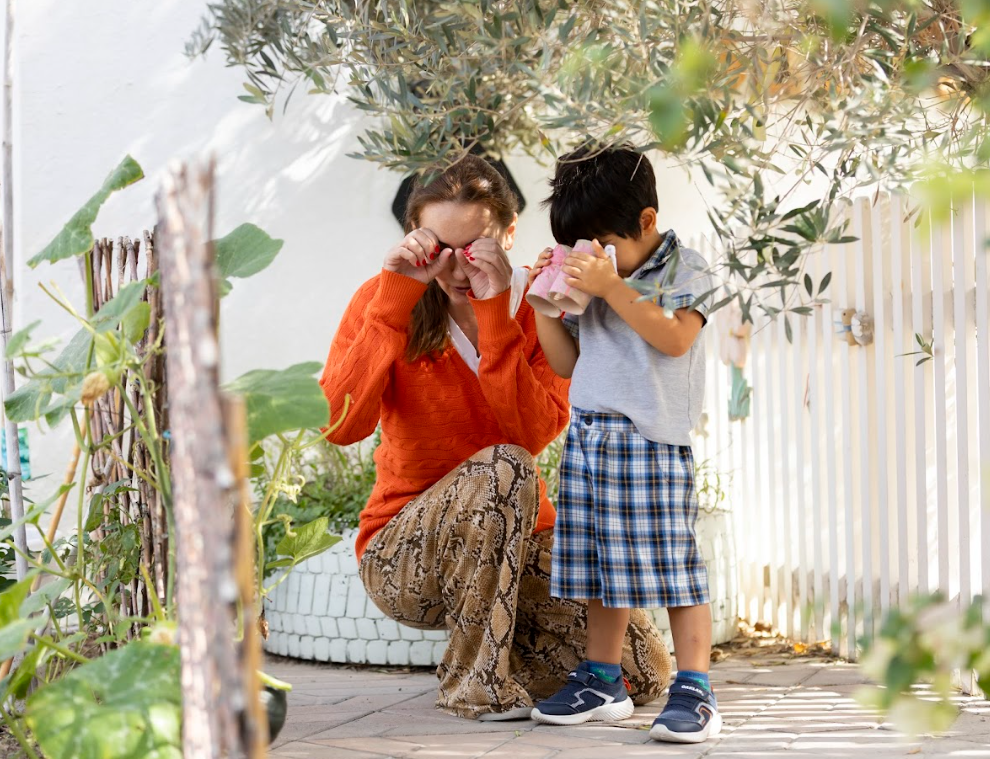
The Curiosity Approach encourages children to explore, investigate, and problem-solve independently. Research in early childhood neuroscience shows that repeated hands-on experiences strengthen neural connections linked to memory, attention, and executive functioning.
Yes. Babies and toddlers learn primarily through sensory experiences, movement, and repetition. The Curiosity Approach aligns closely with this developmental stage by prioritising real objects, open-ended play, and exploration.
Children are given time and space to explore without constant interruption. This supports emotional regulation, confidence, and resilience, as children learn to trust their instincts and feel secure in their environment.
No. It builds strong foundations for later academic learning by developing concentration, language, problem-solving, and curiosity, which are essential for future literacy and numeracy.
Learning is observed through play, interaction, and engagement. Educators document progress by watching how children explore, communicate, and apply new understanding over time.
Play develops skills such as attention, self-regulation, cooperation, and communication. These are key indicators of later success in school environments.
In early years, play is learning. Educators intentionally support play by observing children’s interests and extending learning through conversation, materials, and environment design.
No. There is no evidence that play delays development. In fact, rushing formal learning can increase stress and reduce motivation in young children.
Book A Tour
Fill in the below form & one of our team members will get back to you.