
Choosing a nursery in Dubai can feel overwhelming. There are long waiting lists, different curriculums, glossy brochures and promises everywhere.
But when you strip it back, this decision is not about marketing. It is about your child’s daily experience. It is about where they will feel safe, understood and confident enough to explore.
Here is a practical, results-driven guide to help you choose well.

1. Start With the Environment, Not the Website
Websites are polished, environments are honest. When you visit a nursery, pause before anyone begins their presentation. Stand still and observe.
Ask yourself:
- Do the children look settled?
- Are they engaged or simply occupied?
- Are the adults down at the children’s level?
- Does the space feel calm or overstimulating?
A strong early years setting does not need to be loud to be impressive. In fact, calm and purposeful environments often produce deeper learning.
Look closely at the resources. Are they mostly plastic, single-use toys with one outcome? Or are they open-ended materials that invite thinking, imagination and collaboration?
Research consistently shows that open-ended play supports problem-solving, executive function and creativity. Children who are given time and space to explore develop stronger cognitive flexibility and resilience.
If you see children deeply absorbed in what they are doing, that is a powerful sign.
2. Understand the Curriculum, But Focus on How It Is Delivered
In Dubai, many nurseries follow the EYFS framework. That is a strong starting point. The Early Years Foundation Stage provides structure across communication, physical development, personal and social growth, literacy, mathematics, understanding the world and expressive arts.
But here is the important part… A curriculum is only as strong as the way it is implemented.
Ask:
- How do you adapt the curriculum to individual children?
- How do you observe and assess progress?
- How do you support children who need more challenge or more reassurance?
The best nurseries do not rush outcomes. They understand that early years education is not about ticking boxes, it is about building foundations.
You want a setting that values emotional security as much as early literacy. A child who feels safe learns more effectively. That is not opinion. It is neuroscience.
When cortisol levels are high due to stress, learning decreases. When children feel secure, curious and connected, neural pathways strengthen. Ask how the nursery supports emotional regulation. The answer will tell you a lot.
3. Look for Depth Over Display
Some nurseries look impressive at first glance: themed displays, elaborate sensory trays, and perfect Pinterest corners.
But ask yourself something honest: is the environment designed for children, or for adults scrolling Instagram? Real learning often looks simple.
Water and pipes can become an engineering project. A lantern painting can lead to cultural understanding and thoughtful discussion. A mud kitchen can spark collaboration, language development and scientific thinking.
When children are given open-ended materials instead of predetermined outcomes, something shifts. They stop asking, “Is this right?” and start asking, “What happens if?” That question is where growth begins.
Look for a nursery that trusts children with real materials, real conversations and real responsibility.
4. Ask About Outdoor Play
Outdoor learning is not a bonus. It is essential. Research links regular time in nature with improved attention, stronger motor development and lower stress levels in young children. Natural light supports sleep regulation. Movement supports cognitive development.
Ask:
- How often do children go outside?
- Is outdoor play structured or child-led?
- Are there natural elements available?
Mud kitchens, sand, water, loose parts and open space all contribute to physical confidence and sensory development. If outdoor time is limited to short, controlled slots, consider whether that aligns with your expectations.
A strong early years setting protects outdoor time because it understands the long-term benefits.
5. Consider Language Exposure
Dubai is a multicultural city and language matters. If the nursery offers Arabic lessons, ask how they are delivered.
Are they worksheet-based? Or are they woven naturally into songs, stories and daily interactions?
Early multilingual exposure supports cognitive flexibility and problem-solving. It also strengthens cultural awareness and confidence in diverse settings. If your child will grow up in Dubai, exposure to Arabic supports connection with the local culture and community. The key is ensuring it feels joyful and integrated, not forced.
6. Explore the Relationship With Parents
Nursery should feel like an extension of home, not a separate world.
Ask:
- How do you communicate daily updates?
- How often do you meet with parents?
- How do you handle concerns?
Strong parent partnerships create consistency for children. When home and nursery communicate openly, children benefit from aligned support. Look for warmth in these conversations. You want honesty, not rehearsed answers.
7. Observe How Staff Speak to Children
This may be the most important factor of all. Watch how educators interact.
Do they kneel to eye level?
Do they listen fully before responding?
Do they encourage independence instead of rushing in?
Children build their sense of self through adult responses. Respectful interactions create confident learners. High-quality early years education depends on skilled, reflective practitioners who understand child development deeply.
Qualifications matter. Ongoing training matters. But daily interactions matter most.

8. Consider Sustainability and Values
What does the nursery stand for beyond academics?
Are they mindful of sustainability?
Do they model respect for the environment?
Do children learn through real-life experiences like recycling, gardening or community engagement?
Values are absorbed quietly. A nursery that embeds environmental responsibility into daily life helps children develop awareness and care naturally. You are not just choosing a curriculum, you are choosing a culture and a community.
9. Trial the Experience
If possible, allow your child to experience the setting before committing long-term. Short-term camps or flexible programmes can give families insight without pressure.
Watch how your child responds:
- Do they separate comfortably after a few visits?
- Do they talk about their day with excitement?
- Do they seem proud of what they have done?
Children communicate their comfort levels clearly through behaviour. Trust what you observe.
10. Ask Yourself One Final Question
Does this place feel aligned with how you want your child’s early years to feel? Not just academically, but emotionally.
Do you want calm? Creativity? Structure? Exploration? A balance of all four?
The right nursery will feel steady… not overwhelming, not performative. Just quietly confident in what it offers.
Principal Laura Says:
“As a principal, I often compare choosing a nursery to choosing a home. It needs to be a place where your family feels safe, comfortable, and genuinely connected. It is about far more than a physical space, a polished website, or an impressive marketing campaign… it is about people, community, play, culture, and shared values. If you do not feel aligned on even the simplest things, nothing else truly matters.
When choosing a nursery, you should be able to picture your child thriving in the environment and see yourself as part of the community. A strong nursery should feel like an extension of home, somewhere children feel secure, valued, and inspired each day. In our setting, we intentionally design our spaces and thoughtfully plan experiences and events to create this sense of belonging for both children and families.
While there is a wealth of information available online, through AI forums, and on social media groups, nothing replaces your own experience of visiting a nursery in person. Taking a tour allows you to observe the atmosphere, interactions, and environment firsthand, the things that cannot always be captured online.
However, the experience goes beyond the tour itself. Your journey with a nursery begins from the very moment you make an enquiry. Notice how the team responds, do they answer your questions thoughtfully? Do they follow up promptly? Are they genuinely interested in supporting your family, or does the process feel purely transactional? These early interactions often reflect the culture and values of the setting.
The wonderful thing about living in Dubai is the diversity of choice available to families. If one nursery does not feel like the right fit, that clarity helps guide you towards what you truly want and need. Every family is different, and while one setting may not work for you, there will always be another that aligns with your expectations and values.
Choosing the right nursery is ultimately about finding a place where your child (and your family) feel a true sense of belonging.”
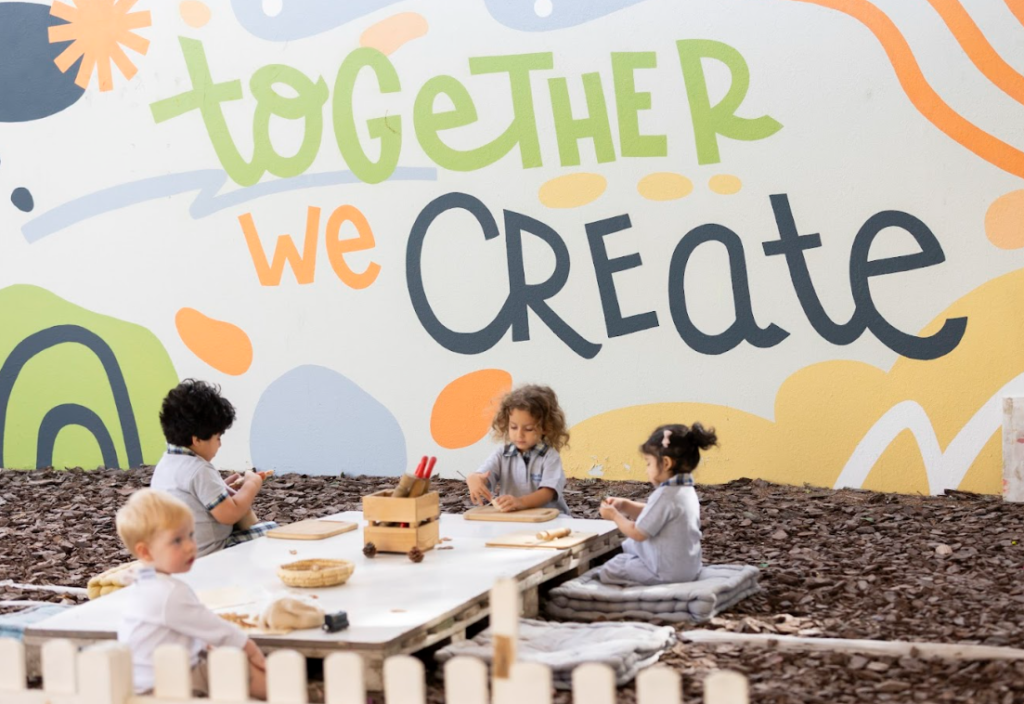
A Thoughtful Approach to Early Years in Dubai
At Yellow Kite Nursery, formerly Kangaroo Kids, we believe early childhood should feel meaningful, not rushed.
As a British EYFS nursery in Dubai, we follow the Early Years Foundation Stage framework with intention and warmth. We blend strong foundations with open-ended exploration, outdoor learning and authentic resources inspired by approaches such as Reggio Emilia.
Our classrooms prioritise emotional security, curiosity and independence. We value partnership with parents. We embed sustainability into daily practice. We protect time for play because research and experience both tell us it works.
But more importantly, we invite families to see it for themselves.
Choosing the right nursery is about choosing the environment where your child will feel seen. So, take your time, visit more than once, ask questions, and observe closely.
When you find the right fit, you will feel it. And so will your child.