
Over the past few weeks, many parents across Dubai have found themselves asking the same questions: Is my child ready for school? Should they be starting earlier now that the age cut-off has changed? And what does “ready” even mean anymore?
With the recent announcement of the UAE’s updated school entry age policy, these questions feel louder, more urgent, and often more emotionally loaded. For families with children who have late birthdays, or those already navigating big transitions, it can feel as though childhood itself is being hurried along by external timelines.
This is where the conversation around schoolification becomes important.
Schoolification is not a new concept, but moments like this bring it sharply into focus. It describes the growing pressure on early childhood settings to look, feel, and operate more like formal schools, prioritising early academics and measurable outcomes over developmentally appropriate learning. While this pressure often comes from a place of good intention, wanting children to succeed, it risks overlooking how young children actually grow, learn, and thrive.
At Yellow Kite Nursery, our role is not to accelerate childhood. It is to protect it, support it, and build strong foundations that children carry with them long after they leave our setting. As one of the leading choices for preschool in Dubai, we believe that getting these early years right is everything.
What Do We Mean by Schoolification?
Schoolification happens when early years environments begin to mirror primary school expectations too soon. This can look like increased focus on worksheets, early writing tasks, structured desk-based learning, and academic benchmarks that are not aligned with a child’s developmental stage.
As this happens, play becomes sidelined, outdoor exploration is reduced, and child-led learning is replaced with adult-directed instruction. Children are expected to sit still for longer, produce outcomes earlier, and demonstrate readiness through performance rather than confidence or emotional security.
The risk is not that children learn to read or write too early. The risk is that we ask them to do so before the developmental layers underneath are ready to support that learning in a healthy, sustainable way.
Why This Matters Now More Than Ever
The new UAE school-age cut-off policy, which shifts eligibility to a 31st December date, means some children may now enter formal schooling younger than before. While eligibility offers families more choice, it also brings unintended pressure. There can be an unspoken sense that earlier must be better, or that children need to be “kept up” academically to avoid falling behind.
This is where clarity matters.
Developmental readiness does not change because a policy does. Children’s brains mature on biological timelines, shaped by relationships, movement, play, and emotional safety. Research consistently shows that pushing academic expectations earlier does not create long-term academic advantage. In some cases, it can increase stress, anxiety, and disengagement from learning later on.
The early years are not a race to school. They are the foundation for everything that comes after.
What Children Actually Need Before School
When we talk about school readiness, it is easy to think in terms of letters, numbers, and sitting still. In reality, the skills that matter most before school are far less visible and far more important.
Children benefit from entering school when they can manage transitions with support, express their needs, navigate friendships, and recover from small challenges. Emotional regulation, social confidence, communication skills, physical coordination, and executive function all play a critical role in how children experience school.
These skills are not taught through worksheets or early academic drills. They develop through play, relationships, movement, repetition, and time.
A child who can ask for help, cope with frustration, and feel secure in themselves is far better prepared for school than a child who can recite phonics but feels overwhelmed by the classroom environment. This is something families navigating the choice of preschool in Dubai often come to understand once they see high-quality early years practice in action.
You Cannot Skip Developmental Layers
A two-year-old and a four-year-old are not separated by knowledge alone. They are separated by significant neurological, emotional, and social development.
Younger children are still learning how to regulate big feelings with adult support, how to engage alongside peers, and how to make sense of the world through exploration. Older children begin to show emerging self-regulation, cooperative play, storytelling, problem-solving, and symbolic thinking.
These layers cannot be rushed or skipped. When pressure is applied too early, children may cope outwardly but struggle inwardly. Over time, this can show up as anxiety, perfectionism, avoidance, or behavioural challenges.
Early academic pressure does not strengthen learning if the emotional and social foundations are still forming.
Principal Laura Says:
“Schoolification is the epitome of hypocrisy. We teach children to be unique, to bloom in their own time, and we encourage parents not to compare children, allowing them to develop at their own pace. Teachers are trained to differentiate learning and support individual needs. Yet, once children enter school, they are placed in large groups, expected to meet the same standards, assessed in the same way, and restricted in their freedom of movement, thought, and action.
What I call the founding fathers of childhood, Froebel, Reggio, Montessori, are often pushed aside in favour of statistics, tick boxes, and grades. Why is it that the moment children step into school, we strip away all the things we hoped would make them happy, unique individuals?
With recent changes to the age cut-off, parents are increasingly turning to nurseries for familiar support, reassurance, and the protection of their child’s childhood and education. I will continue to advocate for children and their needs, and I hope we see flexibility and understanding sooner rather than later, for the sake of the children.”
The Role of Play in Real Learning
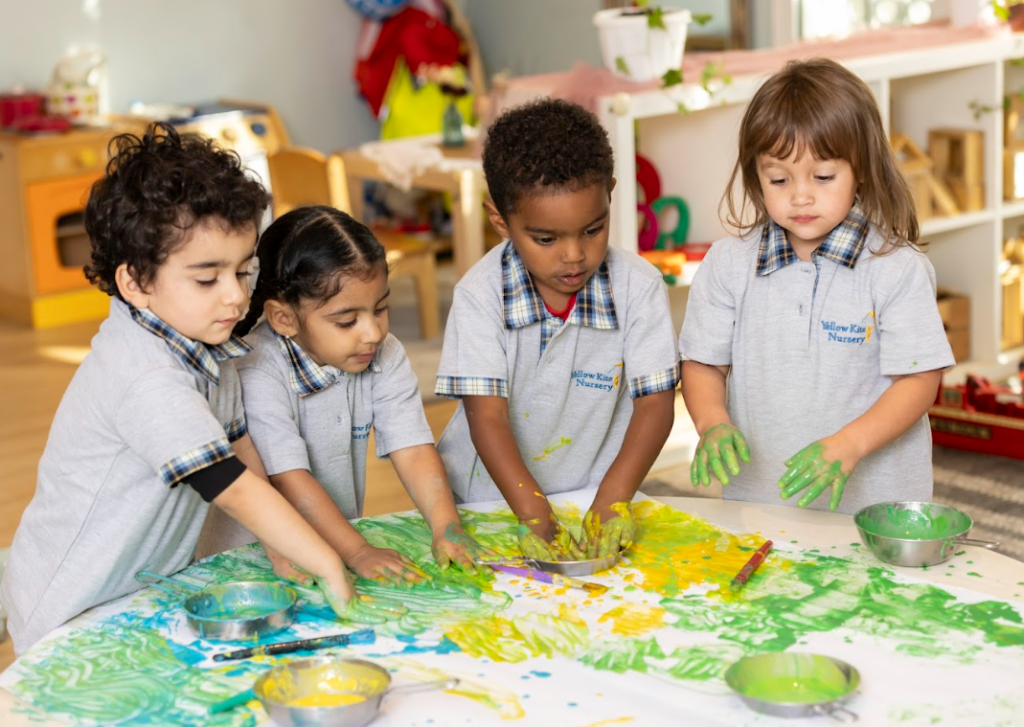
Play is not a break from learning. It is how young children learn.
Through play, children practise decision-making, test ideas, build language, strengthen their bodies, and explore relationships. They learn persistence by trying again, empathy by navigating social situations, and confidence by taking safe risks.
In high-quality early years settings, play is intentional and carefully supported. Educators observe, scaffold, and extend learning without taking control away from the child. This balance allows children to feel capable, curious, and secure.
When play is replaced with early formal instruction, children lose opportunities to develop these essential skills. Learning becomes something done to them, rather than something they actively engage in.
Supporting Parents Through the Noise
We know how loud the early years space can feel. Advice comes from every direction, social media comparisons are constant, and policy changes can add another layer of uncertainty.
Our message to parents is simple and steady. You do not need to rush your child to keep up. You do not need to sacrifice wellbeing for perceived readiness. And you do not need to make decisions based on fear.
Eligibility does not mean obligation. Starting earlier is not always better. What matters is whether your child feels confident, secure, and supported in their development.
If your child needs more time, that time is valuable. If they are ready to transition, readiness should be measured across emotional, social, physical, and cognitive development, not age alone.
The Role of Nurseries in a Changing Landscape
As nurseries, we feel the weight of this moment too. There is increasing pressure on early years settings to align more closely with school expectations, often at the expense of developmentally appropriate practice.
At Yellow Kite Nursery, we remain firmly committed to play-based, child-led learning grounded in early childhood research. We will not sacrifice childhood for convenience, nor will we push children into boxes they are not ready to fit into.
Our educators are trained to understand development, not just deliver content. We observe children carefully, support families thoughtfully, and advocate for what children need, even when it means slowing things down.
Advocacy Starts With Understanding
Advocacy does not mean pushing against schools or policies. It means ensuring that children’s developmental needs remain at the centre of decision-making.
If parents have questions about the age cut-off, KHDA and the Ministry of Education are the right places to seek clarity on policy. When it comes to your individual child, their readiness, and what comes next, that is where early years professionals play a crucial role.
We are on the ground, every day, working with children and families. We see how children grow, where they flourish, and what happens when expectations move faster than development.

Holding Space for Childhood
Childhood is not something to rush through on the way to the next stage. It is a vital period of growth that deserves protection, respect, and trust.
As conversations around school entry continue, our commitment remains unchanged. We will continue to honour real childhood, support families with honesty and care, and advocate for early years practices that put children first. For any family weighing their options around preschool in Dubai, that commitment is not just a promise, it is the foundation of everything we do.
If you are feeling unsure, overwhelmed, or simply need to talk things through, we are here. Not with pressure. Not with fear. But with knowledge, experience, and genuine support.
Because childhood does not need to be fixed. It needs to be protected.